The Q-code is an international set of abbreviations that was created at the beginning of the last century to simplify radiotelegraph communication. Each code is composed by three letters always starting with Q. Each code can be a question if followed by a question mark or an answer (or statement) if not. To avoid confusion, no station call-sign begins with Q. Even if initially designed for telegraphy, it’s also used in voice communications.
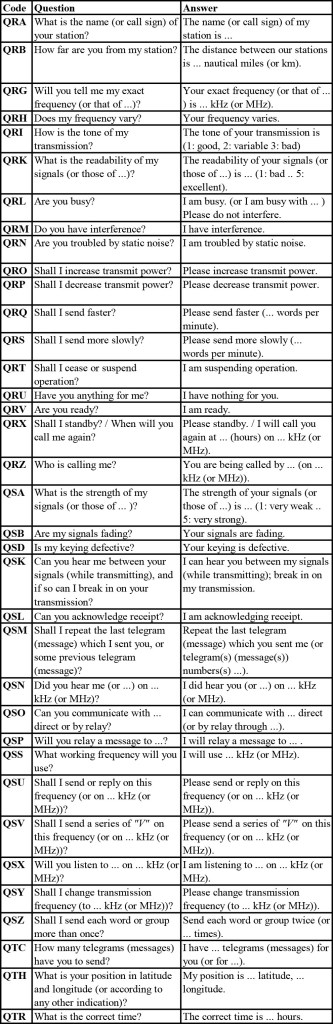
Amateur radio international Q-code
Amateur radio operators use a subset of the full international Q-code and they use it extensively still today. In many countries, learning this code is necessary to obtain a ham radio license; the exact subset used may slightly vary from country to country. Hereunder the most common codes. Sometimes Q-codes are used informally with a slightly different meaning.
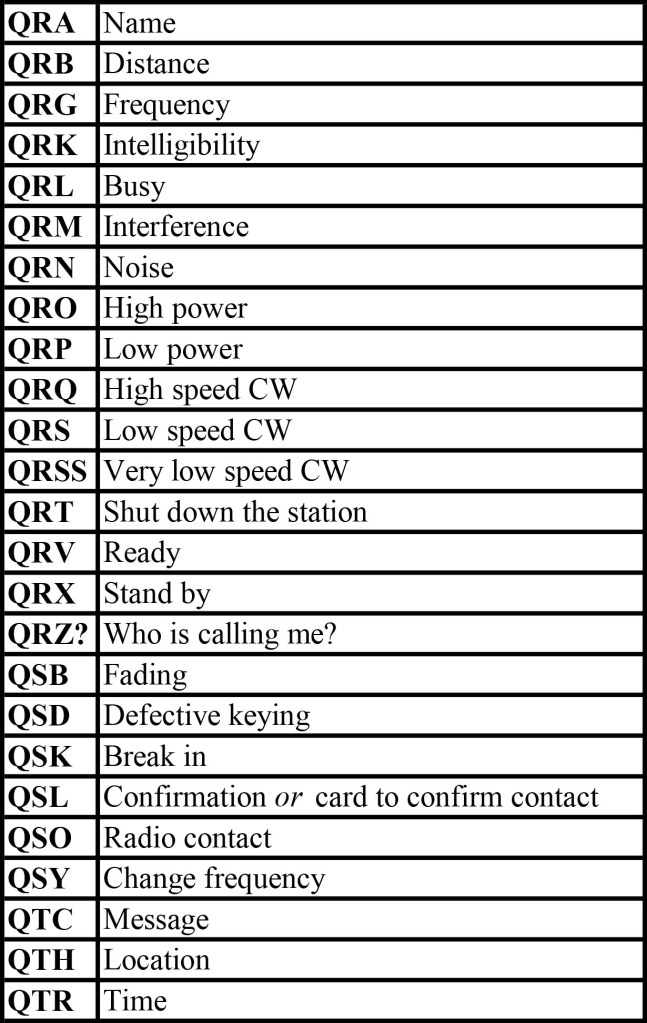
Amateur radio informal Q-code
In informal ham language, some codes have slightly diverted from their original meaning and are used just as a replacement for a specific word. The table below summarizes the most common:
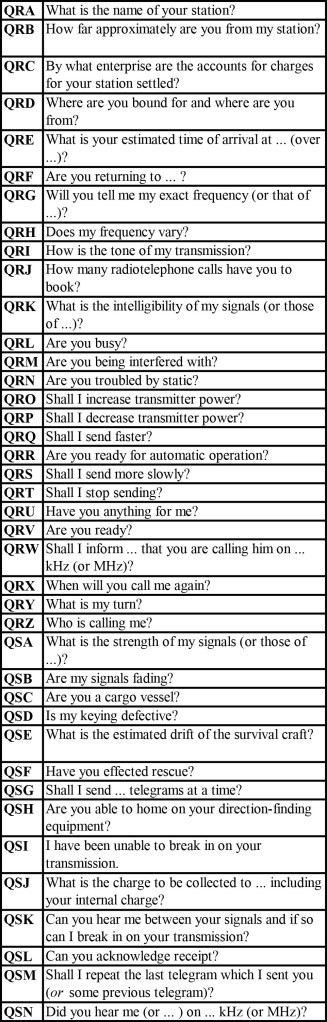
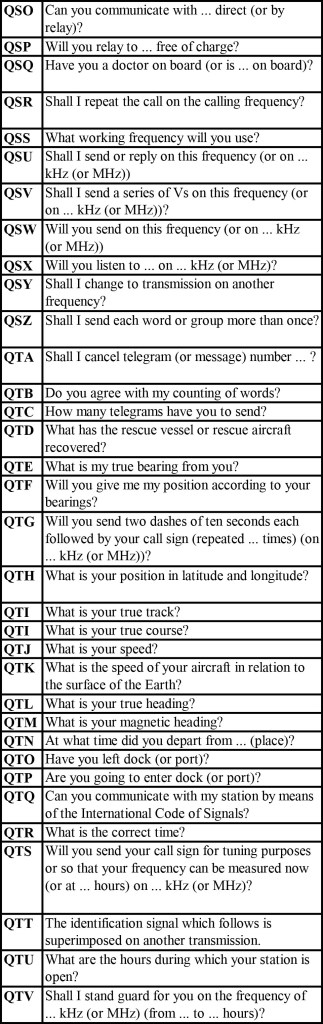
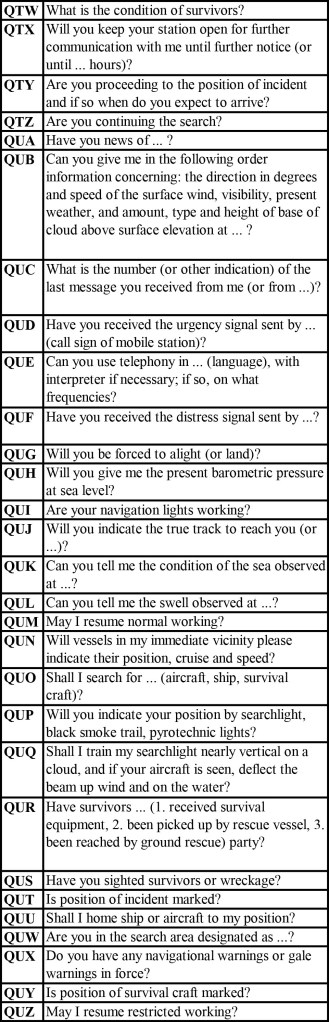
Full international Q-code
This is a more complete Q-code set that includes almost all codes from QRA to QUZ but the majority of them are for maritime/rescue use and are seldom used by amateur radio operators. Then, there are many other Q-codes from QAA to QZZ in use in aviation and maritime traffic that are out of scope here.
Here only the “question” part is shown, but it’s easy to guess the answer from the question.
Bibliography and further reading
[1]Nerio Neri I4NE. Radiotecnica per Radioamatori. C&C – Edizioni Radioelettroniche, 1994, Appendice 14.
[2]OFCOM – Office fédéral de la communication. Prescriptions concernant les radioamateurs. Section concessions de radiocommunication, Rue de l’Avenir 44, CH-2503 Bienne, 2001, Appendice 3.
 4H1FOC Amateur Radio Station